
Revolutionary and Quasi-Revolutionary Episodes in the South Caucasus (2020–2021)
Ruslan Guseinov
Sistemnyj monitoring global'nykh i regional'nykh riskov [Systemic Monitoring of Global and Regional Risks], 2021 · book chapter
Abstract
The article provides a characterisation of revolutionary events in the South Caucasus in 2020 and 2021. Revolutionary destabilisation affected two countries in the region — Armenia (2020–2021) and Georgia (2020). The analysis demonstrates that these events differ markedly in terms of duration, the intentions of the protesters, the balance of political forces, and the underlying causes that triggered instability in each country and in the region as a whole. In Armenia, for instance, opposition political forces — despite their fragmentation — explicitly pursued the goal of overthrowing the Pashinyan regime, which accounted for the prolonged and intense character of the protests. In Georgia, by contrast, the opposition did not seek to change power through unconstitutional means and advanced different demands. It is important to note, however, that both countries have maintained domestic political instability since the very proclamation of their independence. Although the protests in both countries had subsided by the time of writing, Armenia and Georgia remain the most acutely unstable states in the South Caucasus.
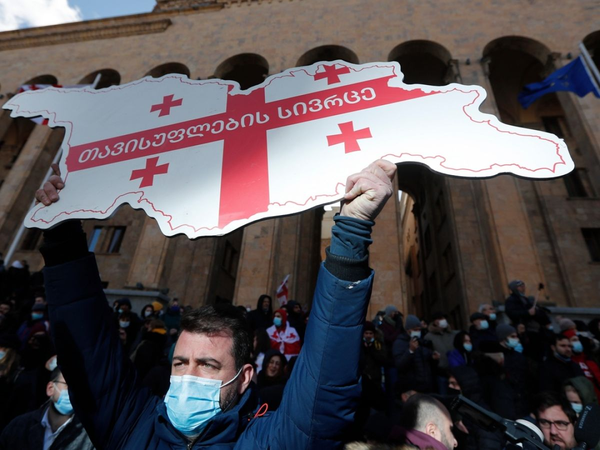
The article provides a characterisation of revolutionary events in the South Caucasus in 2020 and 2021. Revolutionary destabilisation affected two countries in the region — Armenia (2020–2021) and Georgia (2020). The analysis demonstrates that these events differ markedly in terms of duration, the intentions of the protesters, the balance of political forces, and the underlying causes that triggered instability in each country and in the region as a whole. In Armenia, for instance, opposition political forces — despite their fragmentation — explicitly pursued the goal of overthrowing the Pashinyan regime, which accounted for the prolonged and intense character of the protests. In Georgia, by contrast, the opposition did not seek to change power through unconstitutional means and advanced different demands. It is important to note, however, that both countries have maintained domestic political instability since the very proclamation of their independence. Although the protests in both countries had subsided by the time of writing, Armenia and Georgia remain the most acutely unstable states in the South Caucasus.